


ООН0209 производителей
Qualified Ammunition Sealing Wax and Desensitizing Wax Supply
Ammunition sealing wax and desensitizing wax are specialized materials used for different functions in qualified ammunition and energetic-material systems. In legacy bomb designs, material historically procured under MIL-S-3105 is used as an inert sealing and padding compound in the nose and tail portions of the explosive cavity. Desensitizing wax is a separate controlled ingredient used in specified cast and pressed explosive compositions to modify sensitivity and support consistent processing and performance.
ORBITALA supports qualified industrial and defense-sector customers seeking ammunition sealing wax manufacturers, ammunition sealing wax suppliers, desensitizing wax manufacturers and desensitizing wax suppliers in the European Union, wider Europe and approved international markets. Supply is subject to technical acceptance, manufacturer approval, destination, end use, documentation and all applicable regulatory requirements.
The description wax does not identify a universal grade. Petroleum waxes, microcrystalline waxes, synthetic waxes and formulated blends can differ in melting behavior, viscosity, hardness, penetration, oil content, adhesion, compatibility and thermal stability. The approved specification and current batch documentation therefore take precedence over a general product name.
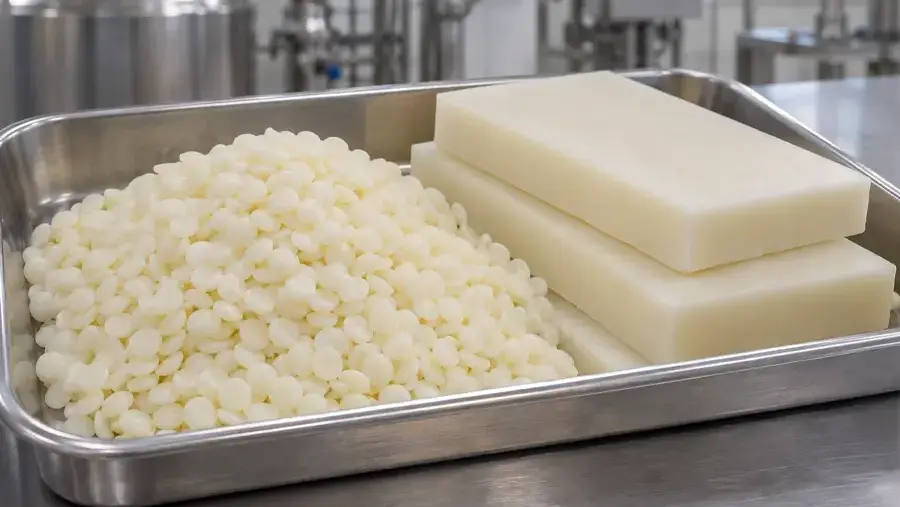
Ammunition sealing wax material prepared for controlled industrial inspection.
What Are Ammunition Sealing Wax and Desensitizing Wax?
Ammunition sealing wax is a functional material used in approved ammunition designs where an inert compound is required for sealing, padding or both. MIL-S-3105 specifically covered use in the nose and tail portions of the explosive cavity of bombs, where the material fills voids at the ends of a cast charge and helps protect the fill against moisture and movement. Other sealing functions may be governed by separate drawings or specifications and should not be assumed to be technically equivalent.
Desensitizing wax has a separate role. It is selected as a controlled component of specified energetic compositions, where its physical and chemical properties influence compatibility, sensitivity, processing consistency and final product performance. The current U.S. Department of Defense specification MIL-DTL-20553E covers desensitizing waxes for cast and pressed explosive compositions and defines three types with different intended usages and melting-point ranges.
Neither term identifies a single chemical substance or CAS number. Commercial products may be formulated from one or more wax families, and the exact composition may be proprietary. Buyers should therefore specify the product by approved grade, military or customer specification, intended use and required test methods rather than ordering generic wax.
Key Differences Between Sealing Wax and Desensitizing Wax
A product may be described commercially as a specialty wax, but that description does not establish suitability for either function. The end user must confirm that the offered material matches the exact drawing, specification revision, approved source and application requirements.
Ammunition Sealing Wax, MIL-S-3105 and MIL-DTL-82633
MIL-S-3105, Sealing Compound, Inert (for Use in Ammunition), covered an inert, nonreactive compound used for sealing, padding or both in the nose and tail portions of bomb explosive cavities. The compound fills voids at the ends of cast explosive charges and helps protect the fill against moisture and movement. Because it can be in direct contact with the explosive, the specified material must remain chemically inert and dimensionally stable and must meet controlled requirements for exudation, penetration and softening behavior across the applicable storage-temperature range.
MIL-S-3105C was canceled on 9 April 2013 and superseded by MIL-DTL-82633, Compound, Polymeric Elastomer, Thermosetting. The superseding specification covers a different material class: a two-part, cured-in-place elastomer used for sealing or padding the tail portion of bomb explosive cavities. Supersession does not make a legacy MIL-S-3105 sealing compound automatically compliant with MIL-DTL-82633.
Legacy drawings and existing systems may still call for MIL-S-3105 material, while newer procurement may require MIL-DTL-82633. Buyers should state the governing specification, revision, drawing and approved reference product, and suppliers should confirm in writing which requirement the offered material meets.
Key Parameters for Inert Ammunition Sealing Compound
Acceptance limits must come from the governing specification, drawing or approved reference product. A legacy requirement for MIL-S-3105 material and a requirement for MIL-DTL-82633 do not describe the same material class and must not be treated as interchangeable. A supplier should not substitute general-purpose paraffin, candle wax, packaging wax or rust-preventive wax for a qualified ammunition sealing compound.
Desensitizing Wax and MIL-DTL-20553E
MIL-DTL-20553E, dated 31 May 2023, is the current U.S. Department of Defense detail specification titled Wax Desensitizing. It supersedes MIL-W-20553D and was reinstated for new and existing designs and acquisitions. The specification covers the requirements, examinations and tests for desensitizing waxes used in cast and pressed explosive compositions.
The specification divides the material into three types. The type is not merely a commercial label; it identifies the intended qualified usage and the applicable melting-point requirement. A purchase order should state the full specification number, revision and type.
This classification should be used only with the complete specification. The customer remains responsible for confirming the approved type, source, revision, qualification status and contractual testing requirements.
Technical Specification and Quality Parameters
The following table summarizes selected physical and chemical requirements in MIL-DTL-20553E. It is provided for procurement orientation and does not replace the controlled specification, contract, drawing or approved manufacturer documentation.
The specification also requires uniform quality and freedom from visible impurities and foreign matter. It uses recognized ASTM methods for properties such as melting point, viscosity, penetration, flash point and oil content, together with specification-specific verification requirements.
Why These Parameters Matter
Melting behavior and viscosity help define how the wax behaves under controlled processing conditions. Penetration provides an indication of consistency and hardness at defined temperatures. Oil content and exudation help identify components that could migrate or separate during storage. Acidity, alkalinity, insoluble matter and reactivity are relevant to chemical cleanliness and compatibility. The fingerprint requirements help confirm that the qualified material remains consistent and that a major formulation or source change has not been introduced without review.
Grades Compatibility and Qualification
Ammunition and energetic-material programs qualify complete material systems rather than generic trade names. Two waxes with similar melting points may differ in molecular distribution, crystal structure, viscosity, hardness, oil content, additives, impurities and interaction with neighboring materials. Those differences can affect sealing performance, process behavior, storage stability or the response of the qualified composition.
For this reason, a change of manufacturer, production site, raw-material source, formulation or analytical fingerprint may require formal change control or requalification. The supplier should disclose the actual manufacturer and production location, while the buyer should identify the technical authority responsible for approving any deviation or alternative.
-
Do not accept a generic wax solely because its melting point appears similar.
-
Confirm the full military, national, customer or manufacturer specification and revision.
-
Compare a recent representative Certificate of Analysis with the contractual limits.
-
Review compatibility and ageing data relevant to the intended assembly or composition.
-
Require written approval before changing the manufacturer, plant, grade or formulation.
-
Define first-article, qualification and conformance testing before production allocation.
Main Applications
Sealing and Padding in Bomb Explosive Cavities
Under legacy MIL-S-3105 requirements, inert sealing compound is used in the nose and tail portions of bomb explosive cavities for sealing, padding or both. It occupies voids at the ends of the cast charge and must remain stable and compatible with the explosive and surrounding assembly throughout storage and service.
Moisture Protection and Dimensional Stability
The compound must help protect the explosive fill against moisture and movement while retaining its physical dimensions across the specified storage-temperature range. Exudation, penetration, softening behavior and chemical inertness are therefore controlled properties rather than general commercial-wax characteristics.
Desensitizing Ingredient in Qualified Compositions
Desensitizing wax is used as a controlled ingredient in specified cast and pressed explosive compositions. The role of the wax is defined by the approved formulation and qualification basis. Only the authorized manufacturer, grade, type and batch should be used, and all processing remains the responsibility of licensed facilities operating under approved procedures.
Research Quality Control and Reference Standards
Small quantities may be required for laboratory comparison, material characterization, qualification support or controlled production trials. A research sample does not by itself establish production approval. Scale-up, plant transfer and full-rate supply require documented technical acceptance and regulatory authorization.
Regions Where Ammunition Sealing Wax Is Manufactured
Commercial wax production is distributed across petroleum-refining regions and specialist formulation centers. Ammunition sealing wax and desensitizing wax, however, represent a much narrower market. A country that produces paraffin wax, base oil or specialty coatings should not automatically be described as a producer of qualified military wax. Plant-level evidence, approved specifications and batch documentation are required.
European Union and Wider Europe
Europe has an established network of petroleum-wax processors, synthetic-wax producers, custom blenders and specialty-coating manufacturers. Production and formulation capability is documented in countries including the Netherlands, Germany and the United Kingdom, with additional chemical and defense-industry activity across France, Italy, Spain, Central Europe and the Nordic region.
European buyers may source qualified materials from specialist formulators, defense-sector manufacturers and authorized distributors. The decisive issue is not whether a company sells industrial wax, but whether the named plant can demonstrate production of the exact approved grade, compliance with the governing specification and consistent batch documentation. The same standard applies to desensitizing wax supplied within the EU and wider Europe.
United States and Canada
North America has integrated petroleum-wax refining, specialty wax blending and contract manufacturing. It also has long-standing defense standards and qualification infrastructure. U.S.-origin desensitizing wax offered to MIL-DTL-20553E should be supported by the applicable qualification, first-article and conformance records required by the procurement. Canadian and U.S. wax networks also supply paraffin, microcrystalline and formulated waxes for industrial applications, but commercial availability does not establish ordnance qualification.
China
China is a major producer of petroleum waxes and specialty wax products. Public information from large refining groups documents substantial special-wax production and research capability, including microcrystalline and application-specific grades. Chinese material can be relevant to international procurement where the plant, grade, specification, export position and end use are acceptable. Buyers should qualify the actual manufacturing site rather than rely on marketplace listings or a distributor address.
India
India has documented paraffin-wax production at major refineries and a broad downstream network of wax blenders, coating companies and defense suppliers. IndianOil identifies wax production at its Digboi and CPCL refineries. This confirms an established wax feedstock base, but it does not mean that every Indian paraffin or blended wax meets ammunition sealing or MIL-DTL-20553E requirements. The offered product must be verified at plant and grade level.
Saudi Arabia
Saudi Arabia has a large refining and petrochemical sector, access to hydrocarbon feedstocks and local wax-product manufacturing. These capabilities support industrial wax conversion, blending and regional supply. Publicly available information does not by itself establish broad commercial production of ammunition sealing wax or MIL-DTL-20553E desensitizing wax in the Kingdom. A Saudi-based offer should identify the production plant, formulation owner, country of origin, qualification status and applicable export or end-use approvals.
Singapore
Singapore is a major Asian center for refining, specialty chemicals, storage, trading and controlled logistics. Jurong Island and the wider energy-and-chemicals ecosystem support sophisticated formulation and regional distribution activities. Singapore is nevertheless better described as a specialty-chemical and supply-chain hub than as a publicly confirmed center for dedicated ammunition sealing wax or MIL-DTL-20553E desensitizing wax production. Buyers should distinguish local stockholding, repacking or blending from manufacture of the qualified grade.
Taiwan
Taiwan has a mature refining, petrochemical and specialty-materials industry. CPC Corporation publicly identifies paraffin and normal paraffin among its chemical products, demonstrating relevant feedstock and processing capability. A Taiwan-based supplier may therefore participate in wax sourcing, conversion or distribution, but ammunition-specific qualification must be confirmed separately. The Certificate of Analysis, Certificate of Origin and manufacturer declaration should identify the true production site and grade.
United Arab Emirates
The United Arab Emirates has large-scale refining, base-oil production, petrochemical logistics and a growing specialty-manufacturing base. ADNOC's Ruwais operations produce base oils and other specialty products, while UAE ports and free zones support regional storage and re-export. These capabilities do not automatically establish local production of ammunition sealing wax or MIL-DTL-20553E desensitizing wax. Offers from the UAE should state whether the material is locally manufactured, blended, repacked or imported, and should provide complete plant, origin and qualification documentation.
Other Asian and International Sources
Japan, South Korea and other advanced industrial markets have significant synthetic-wax, polymer and specialty-chemical capability. South Africa, Latin America and additional refining regions also produce or convert commercial waxes. For a controlled ammunition application, geographic availability is secondary to technical qualification, consistent production, traceability and legal eligibility for the proposed transaction.
Selecting Ammunition Sealing Wax Manufacturers
A qualified manufacturer should be evaluated against the approved application rather than a generic description. The manufacturer must be able to control raw materials, blending or conversion, filtration, packaging, testing and lot traceability. Where the product is proprietary, the supplier may protect formulation details while still providing enough evidence to establish identity, consistency and compliance.
-
Confirm the legal manufacturer, production site and country of origin.
-
Verify experience with the specified ammunition component or sealing function.
-
Review the approved specification, drawing, technical data sheet and representative Certificate of Analysis.
-
Assess adhesion, barrier, ageing, thermal-cycling and compatibility data required by the end user.
-
Confirm lot identification, retained samples, change control and non-conformance procedures.
-
Verify export eligibility, end-user requirements and capacity for the requested quantity.
Selecting Desensitizing Wax Manufacturers
Desensitizing wax manufacturers must demonstrate control of the exact specification and type. For MIL-DTL-20553E procurement, the review should address the current revision, type, first-article requirements, conformance testing, analytical fingerprint and any applicable qualification status. A manufacturer that supplies industrial paraffin wax is not automatically qualified to produce desensitizing wax.
-
State MIL-DTL-20553E and the required type in the enquiry and purchase order.
-
Request a recent batch Certificate of Analysis covering the specified physical and chemical properties.
-
Confirm the manufacturer has a documented process for maintaining formulation and fingerprint consistency.
-
Review first-article, sampling and acceptance requirements before production.
-
Identify any customer-specific tests or compatibility approvals beyond the military specification.
-
Require advance notification and written approval for material, plant or process changes.
Ammunition Sealing Wax and Desensitizing Wax Suppliers in the EU
Qualified ammunition sealing wax suppliers and desensitizing wax suppliers in the EU and wider Europe may act as original manufacturers, authorized distributors or project-sourcing partners. The commercial role should be stated clearly, because only the original manufacturing site can establish production origin, formulation control and batch traceability.
A credible European supplier should identify the manufacturer and production country, confirm the exact grade and specification, provide batch and safety documentation, and explain the proposed import and delivery route. For controlled end uses, the supplier should also coordinate end-user documentation, export licensing, secure logistics and delivery to an authorized facility.
Quality Control and Batch Documentation
Each shipment should be released against an approved specification and supported by documents tied to the supplied batch. The required package depends on the grade and contract, but buyers should define it before production or stock allocation.
-
Batch-specific Certificate of Analysis.
-
Current Safety Data Sheet in the required language and regulatory format.
-
Certificate of Conformity when contractually required.
-
Manufacturer, production-site and country-of-origin declarations.
-
Batch, container and pallet traceability.
-
Specification revision, type and approved manufacturer grade.
-
First-article, qualification or independent inspection reports where required.
-
Change-control declaration and confirmation of formulation or fingerprint consistency.
-
Packing list, net weight and packaging configuration.
-
Transport classification and regulatory documentation for the exact supplied product.
Sampling and acceptance responsibilities should be agreed in writing. MIL-DTL-20553E includes specific provisions for lot formation, representative sampling and conformance verification for desensitizing wax. For inert ammunition sealing compound, the buyer must identify whether the governing requirement is a legacy MIL-S-3105 drawing, MIL-DTL-82633 or another approved specification. Where independent testing is required, the parties should agree on the laboratory, methods, sealed samples and procedure for resolving different results.
Packaging, Storage, Handling and Transport
Specialty waxes may be supplied in lined cartons, bags, pails, drums or other sealed containers, depending on physical form, batch size and manufacturer practice. The packaging should protect the material from contamination, moisture, excessive heat and unauthorized substitution. Container labels should identify the product, manufacturer, batch, net weight, production or release date and required handling information.
Storage conditions and shelf life must come from the manufacturer's current technical data sheet and Safety Data Sheet. Temperature control may be important for preventing deformation, blocking, exudation or changes in physical properties. Materials intended for qualified programs should remain in original sealed packaging until released for authorized use.
Wax products are not assigned one universal transport classification. A solid hydrocarbon wax may be non-regulated for transport, while a solvent-containing sealing compound or another formulation may have different requirements. The manufacturer and dangerous-goods specialist must determine the classification, UN number, packing group, labels and mode-specific requirements for the exact product. The controlled end use may also trigger export, import, transit or end-user documentation even where the wax itself is not classified as dangerous goods.
The European Supply Chain
European supply combines regional wax production and formulation with imported petroleum and synthetic waxes. Availability can be affected by refinery output, feedstock selection, qualification status, defense-program allocation, batch size, testing schedules, export controls and specialist logistics. Application-qualified grades generally have fewer acceptable sources than commercial waxes.
Supply continuity should be planned around the approved manufacturing plant, normal batch size, lead time, minimum order quantity, retained-sample policy and the time required for customer release. A second source can reduce supply risk, but it should be technically qualified before an urgent shortage occurs. Nominally similar waxes should not be substituted during a supply disruption without written approval.
Information Required for a Quotation
A complete request enables ammunition sealing wax suppliers and desensitizing wax suppliers to evaluate technical fit, legal eligibility and logistics before issuing a firm offer. The buyer should provide:
-
Exact product name and intended function: sealing wax or desensitizing wax.
-
Applicable military, national, customer or manufacturer specification and revision.
-
Required type, grade, drawing or approved reference product.
-
Required physical, chemical, adhesion, barrier or compatibility parameters.
-
Quantity per order, annual demand, preferred batch size and delivery schedule.
-
Required packaging, labelling and pallet configuration.
-
Destination country, delivery address and preferred Incoterm.
-
Consignee, final end user and authorized end use.
-
Certificate, inspection, sample and retained-sample requirements.
-
Import, export, transit and end-user documents already available.
-
Restrictions concerning manufacturer, origin or approved production site.
How ORBITALA Supports Qualified Buyers
ORBITALA OOD assists qualified industrial and defense-sector customers with the sourcing and supply coordination of specialty waxes and related controlled materials. Support may include:
-
Reviewing the required product function, grade, type and specification.
-
Identifying technically suitable ammunition sealing wax manufacturers or desensitizing wax manufacturers.
-
Confirming the manufacturing site, country of origin and available batch documentation.
-
Coordinating samples, Certificates of Analysis and independent inspection where required.
-
Aligning packaging, labelling, storage and transport requirements.
-
Supporting export, import, transit, end-user and end-use documentation.
-
Coordinating compliant delivery to an authorized receiving facility.
-
Planning production allocation, stockholding and delivery schedules.
Every enquiry is subject to technical acceptance, manufacturer approval, production or stock availability, destination, end user, end use and applicable laws and regulations. ORBITALA does not arrange supply where the required compliance documents or authorizations are unavailable.
Frequently Asked Questions
Request Information About Ammunition Sealing Wax and Desensitizing Wax
Qualified organizations seeking ammunition sealing wax, legacy MIL-S-3105 sealing compound, MIL-DTL-82633 material, desensitizing wax, MIL-DTL-20553E material or an approved manufacturer grade may contact ORBITALA OOD with the required specification, type, quantity, destination, end user, application, delivery schedule and available permits.
For the fastest assessment, attach the controlled specification or drawing and state the approved manufacturer, required test methods, packaging and certificate package. ORBITALA will review technical suitability, source availability, regulatory eligibility and logistics feasibility before confirming a supply route.