


UN0209 производители
TR60 - Hexotol Flakes, is a widely utilized high explosive known for its powerful detonation characteristics, thermal stability, and adaptability in both military and industrial applications. Composed of a mixture of Trinitrotoluene (TNT) and Cyclotrimethylenetrinitramine (RDX), this material combines the chemical stability of TNT with the explosive strength of RDX, resulting in a highly effective formulation for ordnance and demolition uses.
This article explores the core properties, alternative names, advantages, usage scenarios, and technical specifications of Hexotol, with a focus on the TR60 - 60/40 TNT/RDX flake variant.
TR60 - Hexotol Flakes - Table of Contents:
What is TR60 - Hexotol Flakes?
Hexotol is a binary explosive composed primarily of TNT (Trinitrotoluene) and RDX (Cyclotrimethylenetrinitramine). It is part of a family of composite explosives that were developed to combine the favorable characteristics of both components: the moldability and stability of TNT with the higher brisance and detonation velocity of RDX.
The name Hexotol originates from the combination of Hexogen (another name for RDX) and Toluene (the precursor for TNT). Its use became prominent in the mid-20th century, especially during and after World War II, as military research advanced toward creating more reliable and powerful munitions.
Alternative Names and Designations
Hexotol is known under several names and technical codes across different countries and organizations:
-
Hexotol.
-
Cyclotol (sometimes used for similar RDX/TNT mixtures with varying ratios).
-
RDX/TNT Composite Explosive.
-
Composition B (closely related but typically consists of 60% RDX, 40% TNT, sometimes with paraffin).
Although the names vary, the underlying concept of blending RDX and TNT to produce a stable, high-performance explosive remains consistent.
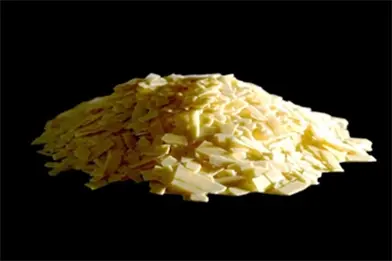
TR60 Hexotol Flakes.
Composition and Chemical Properties
The standard formulation of TR60 Hexotol Flakes in this context includes:
-
TNT: 60% ±2%.
-
RDX: 40% ±2%.
-
Additives: 0–5% (used to enhance processability or stability)
TNT (C₇H₅N₃O₆)
TNT is a widely used high explosive known for its relative insensitivity to shock and friction. It has a low melting point (~80 °C), making it easy to cast, and remains chemically stable over long storage periods.
TNT (C₇H₅N₃O₆)
RDX is a more powerful and brisant explosive than TNT. It decomposes at high temperatures and has a higher detonation velocity (~8,750 m/s), making it a valuable addition to enhance the energy output of composite explosives.
By combining these two, Hexotol gains the thermal and chemical stability of TNT and the energetic performance of RDX.
TR60 Physical Characteristics
The physical form of Hexotol in this specification is flakes, which offer improved surface area and ease of handling during processing and application. The typical appearance is yellow to yellowish, and the material may exhibit:
-
Minor adhesion between flakes (normal).
-
Occasional presence of black spots (acceptable within specification).
Additional Physical Properties:
-
Moisture & Volatile Matter: ≤ 0.2%.
-
Impact Sensitivity (Cast Method): ≤ 44%.
-
Density: Typical formulations are processed at a density of around 1.6 g/cm³.
-
Detonation Velocity: ≥ 7,200 m/s (measured at 1.6 g/cm³).
Advantages of TR60 Hexotol Flakes Over Other Explosives
Optimized Performance
The combination of TNT and RDX allows Hexotol to offer higher detonation speeds and brisance compared to TNT alone, while remaining less sensitive than pure RDX.
Castability
Thanks to TNT's low melting point, Hexotol can be melted and cast into desired shapes, enabling precise filling of shell casings or demolition charges. This is particularly useful in high-volume production environments.
Improved Handling Safety
Compared to pure RDX or other nitramines, Hexotol is less prone to accidental initiation due to friction or impact, making it safer to handle, store, and transport under controlled conditions.
Consistency in Performance
Flake formulations ensure homogenous distribution of explosive components, which contributes to uniform performance across multiple batches or devices.
Cost-Effectiveness
TNT is significantly cheaper than RDX. By using a 60/40 ratio, Hexotol achieves near-RDX performance while reducing raw material costs.
TR60 Detonation and Sensitivity
The detonation characteristics of Hexotol make it suitable for use in applications requiring both high power and reliability:
-
Detonation Velocity: ≥ 7,200 m/s at 1.6 g/cm³ — suitable for shaped charges and high-order detonation.
-
Brisance: High (more than TNT, slightly less than pure RDX).
-
Impact Sensitivity: ≤ 44% (Cast Method) — relatively safe compared to more sensitive explosives like PETN or HMX.
The sensitivity level allows it to be initiated reliably with standard military detonators while minimizing accidental detonation risks during production and transport.
TR60 - Hexotol Flakes Common Applications
Hexotol’s properties make it suitable for a range of uses across military, demolition, and industrial sectors.
TR60 Military Applications:
-
Artillery Shells: Used as a filling in high-explosive (HE) rounds.
-
Warheads: Especially shaped charges and fragmentation warheads.
-
Mines and Grenades: Reliable performance with safe handling characteristics.
-
Booster Charges: Often used as an intermediate between detonators and bulk explosives.
Demolition and Blasting
While less common than in military uses, Hexotol can be applied in controlled demolitions or specific blasting operations where precise control and high detonation velocity are required.
Ammunition Manufacturing
Due to its ability to be cast into specific forms, Hexotol is often used in ammunition assembly lines that produce large quantities of standard ordnance.
Handling and Safety Considerations
-
Although Hexotol is considered stable relative to other high explosives, standard safety protocols must be strictly followed during handling, storage, and transport.
-
Storage: Should be stored in cool, dry, and well-ventilated areas away from heat sources and incompatible materials (e.g., strong acids).
-
Protective Equipment: Use of gloves, goggles, and antistatic garments is recommended during manufacturing or application.
-
Transportation: Subject to national and international regulations for the shipment of hazardous materials (e.g., UN Class 1.1D explosives).
-
Disposal: Should be performed by qualified personnel in accordance with hazardous waste regulations.
Environmental Considerations
Like many traditional explosives, Hexotol poses environmental challenges:
-
TNT Residues: Known to be toxic to aquatic life and persist in soil and groundwater.
-
RDX Leaching: Can migrate through soil and contaminate water supplies.
-
Remediation: Requires specialized cleanup procedures, such as bioremediation or chemical neutralization.
Efforts are ongoing to develop environmentally friendly energetic materials, but for now, proper management of explosive residues remains essential when using Hexotol.
Summary
TR60 - Hexotol Flakes (60% TNT / 40% RDX) is a versatile and high-performing composite explosive that bridges the gap between safety and power. Its specific formulation offers a reliable solution for both military and controlled demolition applications, particularly where high detonation speed, castability, and stable handling are required.
Key Advantages of the TR60 Hexotol Flakes:
-
Enhanced power compared to TNT alone.
-
More stable than pure RDX.
-
Castable for precision applications.
-
Flake form improves handling and processing.
-
Suitable for use in artillery, warheads, grenades, and boosters.
As military and industrial demands continue to evolve, materials like Hexotol remain central to the ongoing development of reliable and efficient explosive technologies.